Invisible Cities
A community-curated mixed-reality platform that treated public AR space as something people could collectively author, contest, and govern.
If mixed reality becomes public space, who gets to author and govern what appears there?
Location-based mixed reality overlays digital material onto places that already carry social, cultural, and political meaning. Invisible Cities treated those overlays as community resources rather than neutral visual effects. The project asked what happens when authorial control over spatial media is ceded to the people who inhabit the place.
Three semesters of research-through-design with eight undergraduate researchers.
I led the research agenda, supervised eight undergraduate researchers across three semesters, served as senior developer and project manager, and guided the team through interviews, competitive analysis, affinity mapping, storyboarding, system design, and implementation.
My role
Lead Researcher · Senior Developer · Project Manager. I framed the research problem, directed the undergraduate research program, guided the design process, and contributed directly to the technical architecture and implementation.
Participants could build, place, explain, rank, flag, and collectively govern situated mixed-reality sculpture.
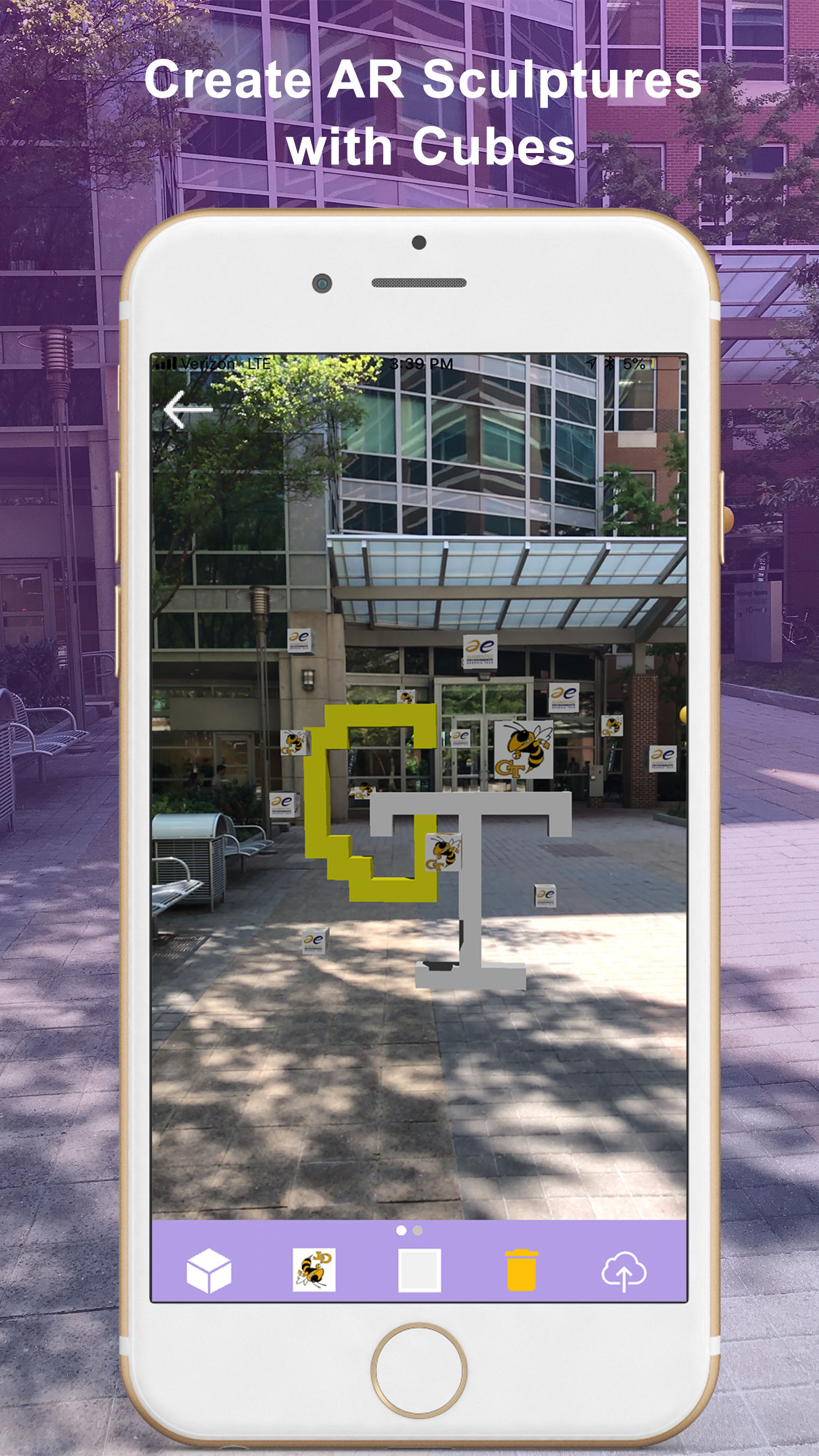
Users created block-based 3D sculptures, applied colors and textures, painted on them, attached descriptions, and situated them at specific campus locations. Once uploaded, the objects became part of a shared mixed-reality layer rather than remaining private creations.
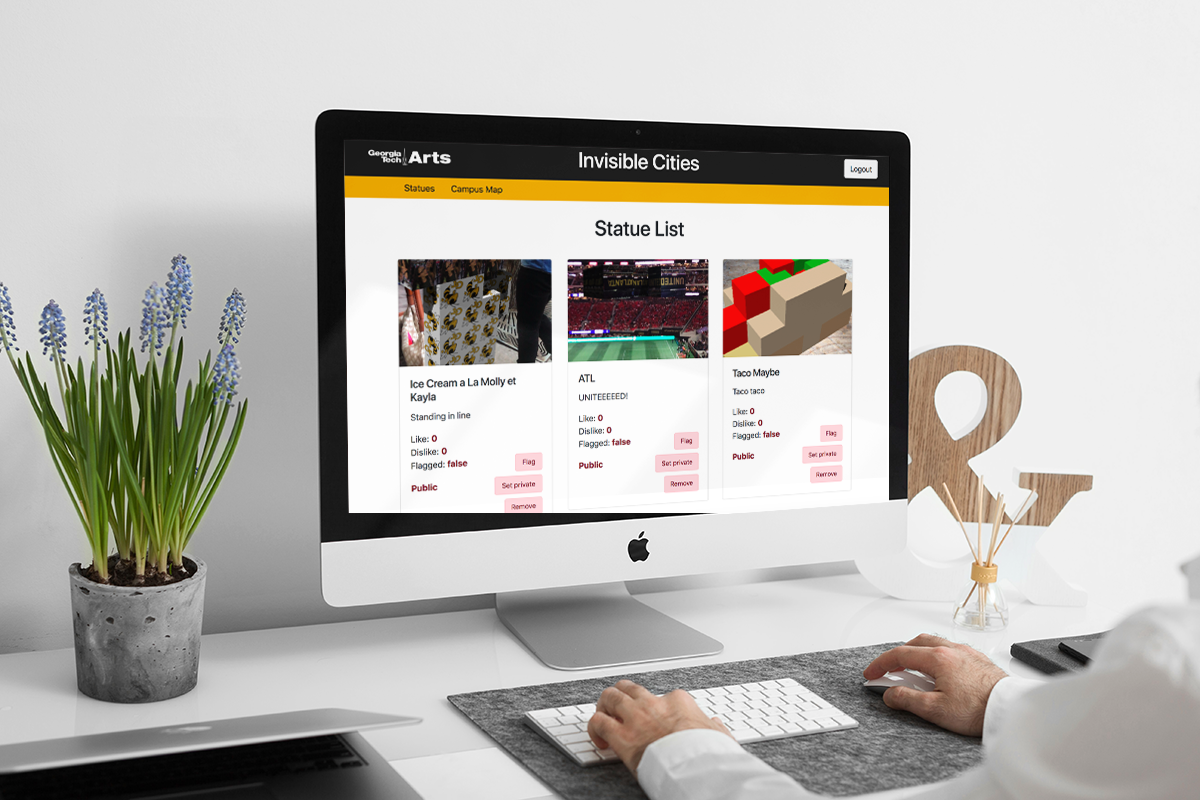
Curation occurred at multiple levels. Users could like, dislike, and flag situated objects; heavily down-voted objects gradually became transparent; and community arts leaders had a dashboard for reviewing flagged work, moderating comments, restoring content, and preserving objects important to local context.
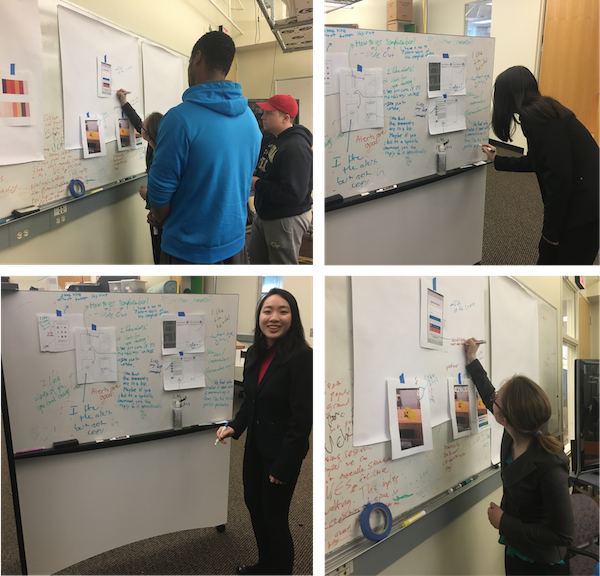
The platform emerged from a student-centered design research process.
The team interviewed students about campus culture and 3D creation practices, reviewed comparable mixed-reality and locative systems, organized findings through affinity mapping, and translated those findings into user stories and interaction flows.
The project also became the foundational prototype for later dissertation work on shared mixed-reality authoring and community storytelling.

A published prototype with early adoption—not a completed longitudinal deployment study.
The app recorded more than 100 installations during its prototype period. The planned larger user studies and sustained institutional deployment described in the CHI PLAY paper were not completed, so I do not present Invisible Cities as a validated long-term intervention.
Its contribution is instead architectural and conceptual: it demonstrates a community-curated model for situated media in which authoring, visibility, moderation, and the politics of place are designed together.
The project became a published argument about spatial justice and participatory mixed reality.
- CHI PLAY Extended Abstract · 2018Fisher, J. A., Shangguan, L., & Crisp, J. S. “Developing a Platform for Community-Curated Mixed Reality Play Spaces.”