
XR Safety Training for Utility Workers
Sixteen deployed 360° safety-training modules designed around the devices and enterprise systems utility trainers were actually willing to use.
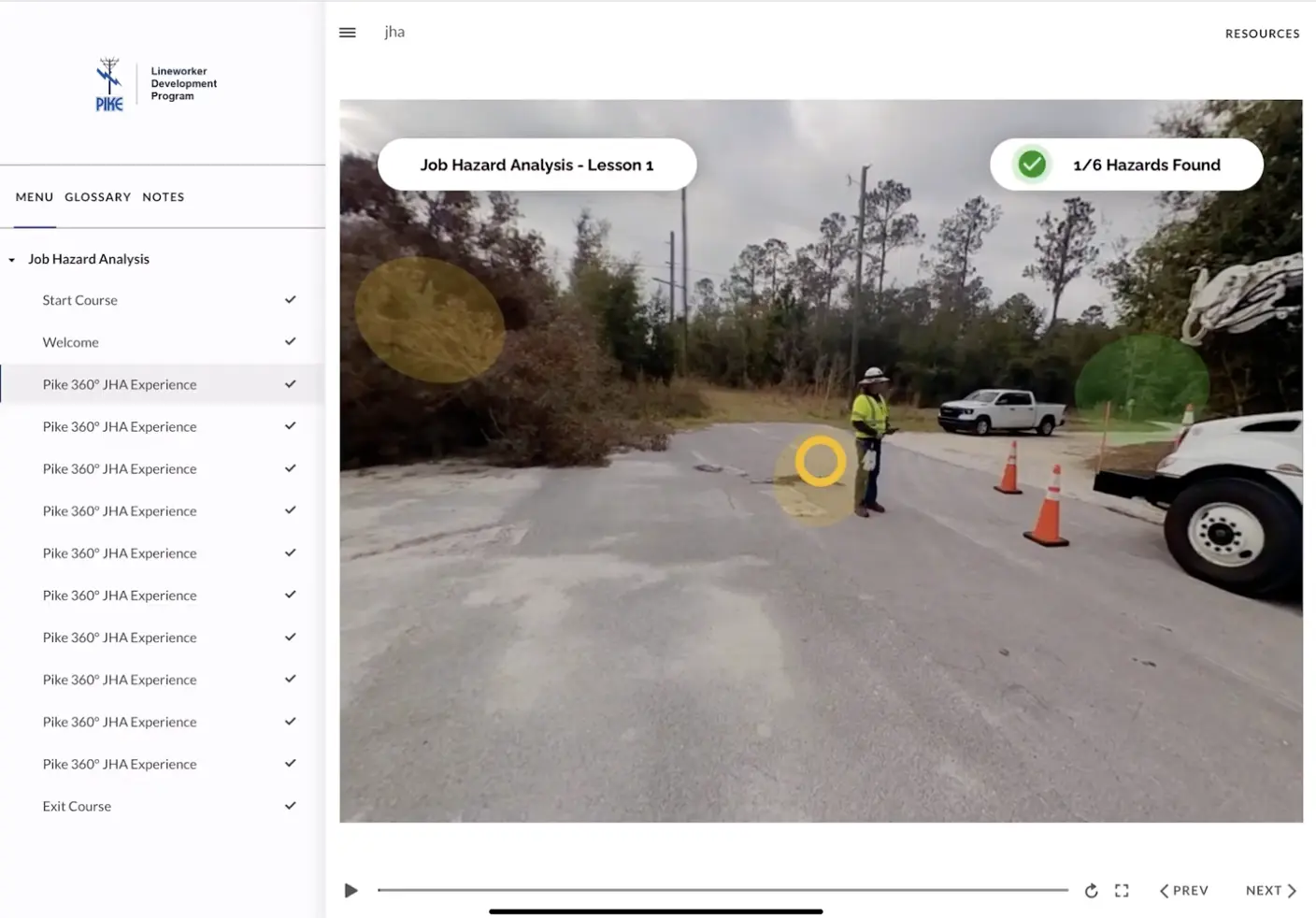
The right immersive-training format was not a headset.
PIKE Electric needed realistic safety training for line workers across a distributed workforce. Early requirements conversations with trainers made a critical constraint clear: workers were not interested in wearing VR headsets as part of routine training. The project therefore shifted from headset-first assumptions toward interactive 360° experiences designed for the iPads already present in the training environment.
A multi-year, externally funded production integrating interaction design, web development, and enterprise delivery.
I served as developer and project manager on a five-person production team. I helped translate trainer requirements into interaction patterns, built and integrated the web-based experiences, and supported delivery through the organization’s existing LMS infrastructure.
My role
Developer · Project Manager. I coordinated technical production and developed the interactive 360° modules while keeping the delivery architecture compatible with PIKE’s iPad, Storyline, LearnUpon, and enterprise-hosting constraints.
Sixteen deployed modules turned 360° job-site video into active safety practice.
The final system includes 16 web-based lessons using high-resolution 360° video and A-Frame interactions. Training patterns include hazard identification, PPE configuration, procedural sequencing, timed hazard warnings, embedded knowledge checks, and guided virtual tours.
The experiences are hosted through web infrastructure and embedded into Storyline/LearnUpon so that immersive material remains part of the organization’s established training ecosystem rather than a separate novelty product.
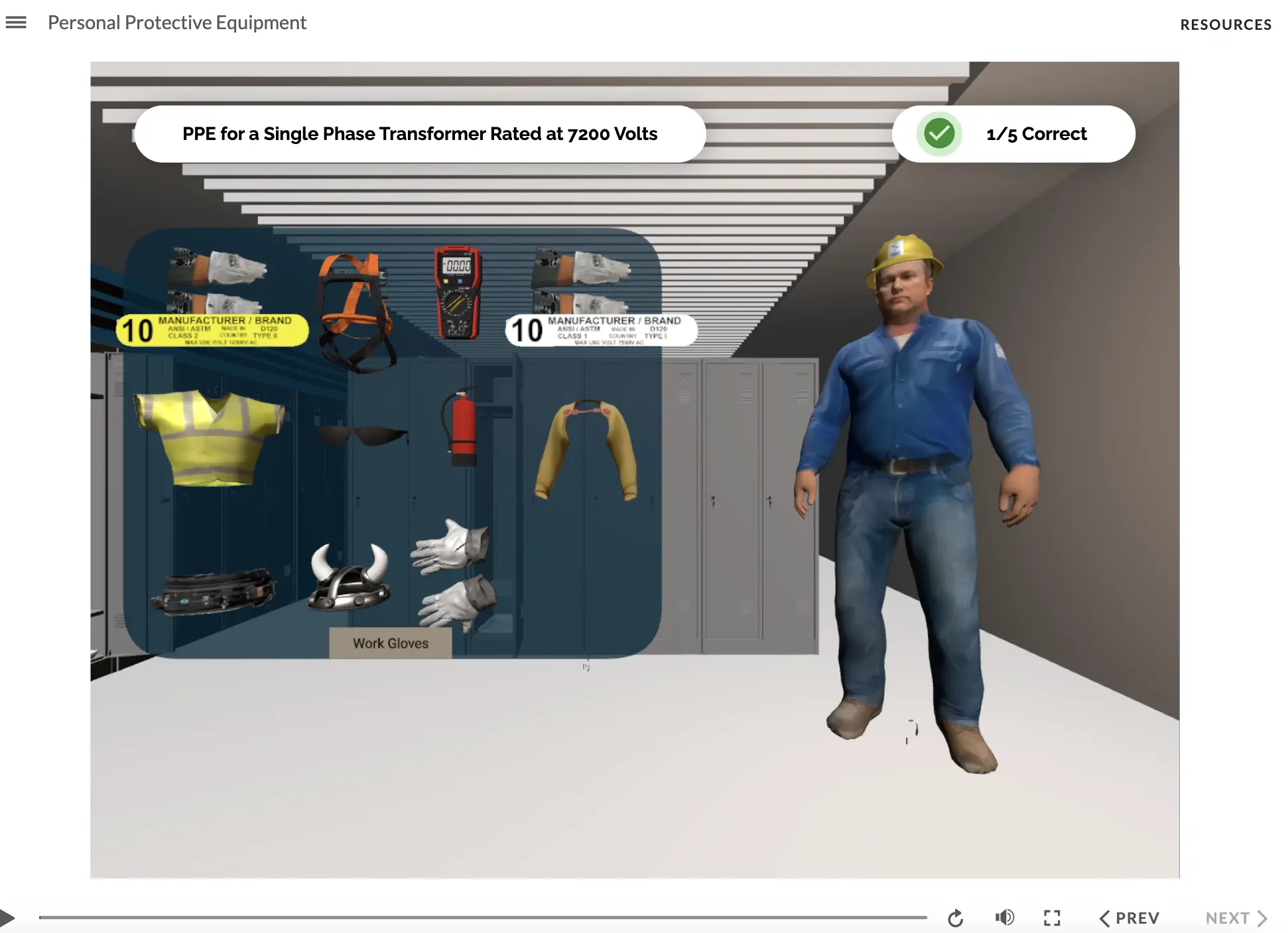
Trainer interviews changed the delivery platform.
The key platform decision emerged from interviews with PIKE trainers rather than from formal worker usability testing. Those conversations indicated that headset adoption would create avoidable friction, so the team optimized for iPads and web delivery. I do not characterize the project as having been evaluated directly with line workers unless additional evidence becomes available.
All 16 lessons were deployed into the client’s training environment.
The modules were deployed between 2023 and 2026. The project was supported by approximately $150,000 in external production funding. Although I do not have a defensible end-user count, the system’s significance lies in the scale of the production and its integration into an operational enterprise-training stack.